


Plastic Crushing Equipment
Short Introduction
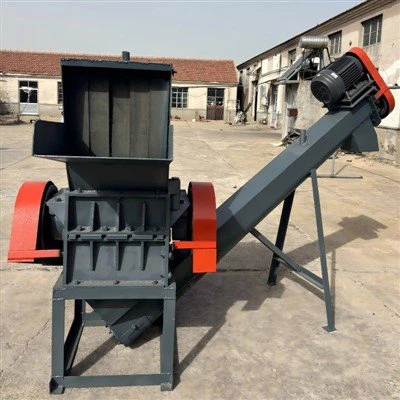
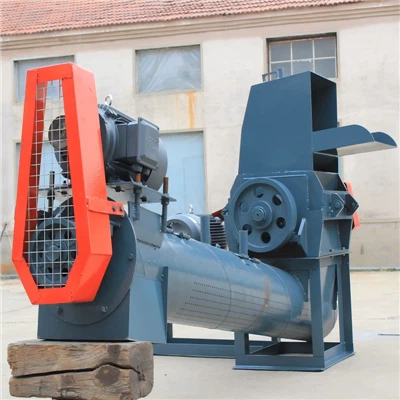
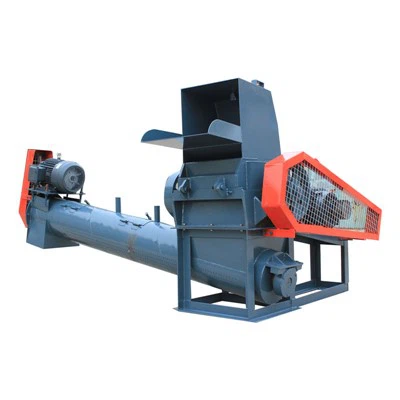
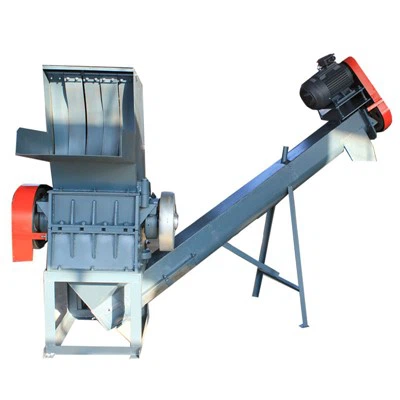
Industrial plastic crushers and granulators transform bulky polymer scrap—ranging from thick-walled injection molded parts to thin agricultural films—into uniform, reusable regrind. Built with thick-walled welded steel frames and high-alloy tool steel blades, these machines maintain tight rotor-to-stator cutting tolerances to ensure consistent particle size and minimal thermal degradation during continuous, multi-shift operation.
Equipment Range
Heavy-Duty Granulators (H-Series)
Features open-rotor or closed-rotor designs with 3-blade to 5-blade configurations. Tailored for rigid plastics, thick lumps, purgings, and profile scrap. Chamber widths span from 400mm to 1200mm.
Film and Fiber Crushers (F-Series)
Incorporates tangential infeed hoppers and V-cut rotor geometry to prevent film wrapping and stretching. Processes stretch film, woven bags, and synthetic fibers directly without pre-shredding.
Integrated Crusher-Blower Units (C-Series)
Combines the cutting chamber with a direct-coupled pneumatic extraction blower and cyclone separator for closed-loop regrind transfer to storage silos or processing lines.
Suitable Materials
Engineering Plastics
ABS, PC, PA, POM, PBT, PMMA (injection molded parts, runners, automotive components).
Commodity Polymers
HDPE, PP, LDPE, PVC, PET (blow-molded bottles, crates, pipes, sheets, thermoformed trays).
Flexible Substrates
LDPE stretch film, agricultural greenhouse film, PP woven sacks, jumbo bags (FIBC), and synthetic carpet fibers.
Applications
In-House Injection Molding Reclamation
Placed beside injection presses to instantly resize defective parts and sprues, feeding regrind directly back into the feed throat via volumetric dosers.
Central Post-Consumer Recycling Plants
Sizing bulky municipal and industrial waste bales downstream of heavy industrial shredders before washing and sink-float separation tanks.
Extrusion Line Scrap Loop
Reclaiming edge trim, thick sheet skeletons, and pipe startup lumps continuously to eliminate polymer waste.
Material Feeding: Material enters the cutting chamber via a gravity hopper, force-feeding ram, or horizontal conveyor belt.
Size Reduction: The rotating rotor (spinning at 450 to 700 RPM) carries fly knives that shear material against stationary bed knives mounted on the chamber wall.
Sizing and Discharge: Material remains in the chamber until it is sheared down to dimensions smaller than the holes in the interchangeable sizing screen bolted beneath the rotor.
Evacuation: Gravity drops regrind into a collection bin, or a pneumatic suction blower extracts flakes upward through a cooling cyclone separator.

How to Choose
Match Rotor Type to Material: Use claw rotors (3 to 5 rows of teeth) for rigid lumps, thick profiles, and dense PUR/PVC blocks. Use V-rotor or staggered scissor-cut rotors for thin films, hollow bottles, and low-bulk-density items to reduce friction heat.
Calculate Required Motor Power: Base kilowatt ratings on density and throughput targets. Expect 11 kW to 15 kW for light regrind up to 300 kg/h; specify 75 kW to 160 kW motors for high-volume rigid scrap exceeding 1500 kg/h.
Verify Screen Aperture: Select screen hole diameters (typically 6mm to 20mm) based on downstream processing requirements—smaller screens generate finer regrind but reduce hourly throughput.
Integration with Recycling Lines
Mechanical Sync
Interlock crusher infeed conveyors with upstream metal detectors and shredders to halt the feed instantly if tramp metal (bolts, dies) triggers a sensor.
Pneumatic Conveying
Tie discharge blowers into dust filtration cyclones and metal separators prior to feeding closed-loop regrind silos or washing friction washers.
Power and PLC Interfacing
Connect emergency stop loops and motor load monitors to the central plant PLC to prevent overfeeding and motor stalling during peak surges.

Chamber Machining: Main welded steel housings are annealed in a high-temperature furnace post-welding to relieve internal stress, then machined on CNC floor boring mills to guarantee a parallel rotor housing tolerance within 0.03mm.
Rotor Forging and Balancing: Rotors are forged from solid 42CrMo alloy steel, ultrasonic flaw-detected for internal voids, and dynamically balanced on ISO 1940-1 compliant test stands to grade G2.5 at operating speeds.
Knife Metallurgy: Blades are manufactured from D2 (SKD11) or imported powder metallurgy tool steel (such as CPM 10V), vacuum heat-treated to 58 to 62 HRC to resist abrasive glass-fiber-filled polymers.
Overseas Supply and Support
Export Packing
Sealed inside heavy-duty waterproof vapor-barrier foil, bolted to fumigated structural steel skids, and secured inside 20-foot or 40-foot high-cube ocean containers.
Spare Parts Inventory
Standard replacement items—including bed knives, fly knives, sizing screens, and screen holders—are stocked in standard metric sizes for dispatch within 48 hours.
Commissioning and Documentation
Supplied with full English electrical schematics (UL/CE compliant components), PLC source code, hydraulic maintenance manuals, and optional on-site technician deployment for installation sign-off.
FAQ
As one of the most reliable plastic crushing equipment manufacturers in China, we warmly welcome you to buy cheap plastic crushing equipment made in China here from our factory. All customized machines are with high quality and low price. For pricelist, contact us now.
Automatic High Efficiency Plastic Crushing Equipment, Heavy Duty Waste Plastic Bottle Crusher, Plastic Film Crushing Machine